Understanding and Reducing Your Electricity Bill in Australia
Electricity bills feel unpredictable because you only see them every 90 days. Learn how pricing works, how to estimate your bill, what drives costs, and how to reduce and budget for your electricity.
Why electricity bills feel unpredictable
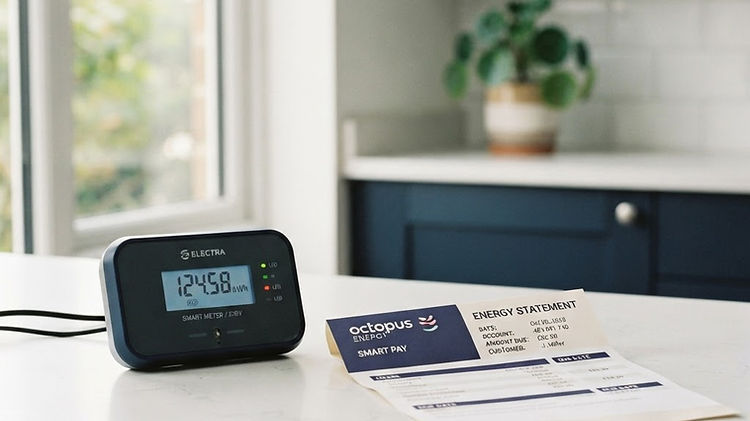
Electricity is one of the most complained-about household expenses, largely because the bills feel unpredictable. You use power every day but only see the cost every 90 days, and by then it's hard to connect the bill to what you actually did.
The good news: electricity costs are more predictable than they feel. Once you understand how you're charged and what drives the cost, you can estimate, reduce, and plan for your bills without surprises.
How electricity pricing works
Australian electricity bills have three main components:
1. Supply charge (fixed)
A daily charge for being connected to the grid, regardless of how much power you use. This is typically $1–$1.50/day, or $90–$135 per quarter. You pay this even if you're away on holiday.
2. Usage charge (variable)
The cost per kilowatt-hour (kWh) of electricity you consume. This is the part you can control. Usage charges vary by:
- Your plan and retailer — 25–45 cents/kWh is typical
- Time of use — some plans charge more during peak hours (3pm–9pm) and less off-peak
- Your state — prices differ significantly across NSW, VIC, QLD, SA, and WA
A typical household uses 15–25 kWh/day, which at 35 cents/kWh is $5.25–$8.75/day in usage, or $472–$788 per quarter.
3. Discounts and concessions
- Pay-on-time discounts — some plans offer 10–25% off if you pay by the due date. These are disappearing but still exist on some plans.
- Concessions — pensioners, seniors, and low-income households may be eligible for state government concessions (typically $50–$300/year).
- Solar feed-in tariffs — if you have solar, you receive a credit for excess power exported to the grid.
Estimating your quarterly bill
To estimate your next bill, you need two numbers:
- Your daily usage in kWh — check your previous bill, which shows your average daily usage
- Your usage rate — check your bill or your retailer's website
Estimated quarterly usage cost = Daily kWh × Usage rate × 91 days
For example, 20 kWh/day at 35 cents/kWh:
20 × $0.35 × 91 = $637
Add the supply charge: $637 + $120 = $757 estimated quarterly bill
If you have solar, subtract your feed-in credit. If you export 10 kWh/day at 8 cents/kWh: 10 × $0.08 × 91 = $73 credit. Net bill: $757 − $73 = $684.
What drives electricity costs
Understanding what uses the most power helps you target reductions:
The big energy users
- Heating and cooling — 20–40% of household energy. Reverse-cycle air conditioning is the largest single cost for many homes.
- Hot water — 15–25%. Electric storage systems are expensive; heat pumps and solar are much cheaper to run.
- Appliances (fridge, washing machine, dishwasher, dryer) — 15–20%. The fridge runs 24/7; the dryer is expensive per use.
- Cooking — 5–10%. Induction is efficient; electric ovens use a lot.
- Lighting — 5–10%. LED lighting uses 80% less than old halogen or incandescent bulbs.
- Standby power — 5–10%. Devices on standby (TVs, chargers, game consoles) add up.
Seasonal patterns
Bills are highest in summer (air conditioning) and winter (heating), and lowest in spring and autumn. If your bills swing wildly between seasons, heating and cooling are the likely cause.
Reducing your electricity bill
Quick wins (no cost)
- Adjust the thermostat. Each degree cooler in summer or warmer in winter adds roughly 10% to heating/cooling costs. Set cooling to 24–26°C and heating to 18–20°C.
- Use appliances off-peak. If you're on a time-of-use plan, run the dishwasher and washing machine during off-peak hours (typically 10pm–7am).
- Turn off standby. Switch off devices at the wall when not in use. Standby power can be $100–$200/year.
- Use natural light and ventilation. Open blinds in winter for warmth, close them in summer to reduce cooling.
- Wash in cold water. Heating water for washing is a significant cost. Cold washes save $50–$100/year.
Medium-term (small investment)
- Switch to LED bulbs. If you still have halogen or incandescent bulbs, replacing them pays for itself in months.
- Draft-proof doors and windows. Weather strips and door snakes reduce heating/cooling loss.
- Use a clothesline instead of the dryer. A dryer costs $1–$3 per load. A clothesline is free.
- Install a low-flow showerhead. Reduces hot water use, saving on both water and electricity.
Long-term (larger investment)
- Solar panels. A 6.6kW system can reduce bills by 50–80%, depending on your usage pattern and feed-in tariff. Typical payback is 3–6 years.
- Heat pump hot water. Uses 60–70% less energy than electric storage. Rebates are available in some states.
- Energy-efficient appliances. When replacing, check the star rating. A 4-star fridge uses about half the energy of a 2-star model.
- Better insulation. If your home is poorly insulated, adding ceiling and wall insulation can reduce heating/cooling costs by 20–40%.
Checking you're on the best plan
Electricity retailers change their plans regularly, and the plan you signed up for may no longer be competitive. Check annually:
- Find your current plan details — on your bill, note the retailer, plan name, usage rate, and supply charge.
- Use a comparison tool — Energy Made Easy (federal government) or your state's comparison site.
- Compare 3–5 plans — look at the estimated annual cost, not just the headline discount.
- Switch or negotiate — if you find a better plan, switch (it's free and takes 5 minutes), or call your current retailer and ask them to match.
A 10-minute comparison can save $200–$500/year. Many people haven't switched in years and are paying 20–30% more than they need to.
Budgeting for electricity
Because electricity bills are quarterly and variable, they can derail a pay cycle if not planned for. Two approaches:
- Sinking fund. Estimate your quarterly bill, divide by 13 (fortnights), and save that amount each pay. When the bill arrives, the money is there. See our guide to sinking funds.
- Bills account. Include electricity in your fortnightly bill equivalent and transfer it to a bills account each payday. See our guide to managing household bills.
The Payday Compass app lets you enter your electricity bill with its quarterly frequency and due date, and it will project when it's due and whether your balance will cover it.
Summary
Electricity bills feel unpredictable because you only see them every 90 days, but they're driven by two things you can track: your daily usage and your usage rate. Estimate your bill from these numbers, reduce costs by targeting heating, cooling, and hot water, check annually that you're on the best plan, and budget for the quarterly bill with a sinking fund or bills account. The key is turning a 90-day surprise into a planned, manageable expense.
To track your electricity bill alongside all your other household expenses, try the Payday Compass Money Runway.
Put it into practice
The Payday Compass workbook brings these ideas together in one organised spreadsheet.
Explore the Budget Planner