How to Plan and Budget for a Working Holiday
A working holiday is a year abroad funded by work, not a holiday funded by savings. Learn how to save before you go, budget for the destination, plan for variable income, and manage money across two countries.

What is a working holiday?
A working holiday is an arrangement between countries that allows young adults (usually 18–30 or 18–35) to travel to a partner country for up to a year (sometimes longer) and work to fund their stay. Australia has working holiday agreements with over 40 countries, and Australians can do working holidays in many countries in return.
A working holiday is different from a regular holiday: you're not just visiting — you're living and working in another country, often for months. This makes the financial planning more complex and more important. A regular holiday has a defined cost and a return date; a working holiday has an uncertain income, variable living costs, and a duration that depends on how things go.
This guide covers how to plan and manage money for a working holiday.
Step 1: Understand the visa and its conditions
Before anything else, understand the visa you'll be on and its conditions. For Australians going abroad, and for visitors coming to Australia, working holiday visas have specific rules.
For Australians going on a working holiday
Popular destinations for Australians include:
- United Kingdom: Youth Mobility Scheme, 2 years, age 18–30
- Canada: International Experience Canada, 12–24 months, age 18–35
- Japan: Working Holiday Visa, 12 months, age 18–30
- South Korea: Working Holiday Visa, 12 months, age 18–30
- Germany: Working Holiday Visa, 12 months, age 18–30
- France: Working Holiday Visa, 12 months, age 18–30
Each visa has conditions — age limits, duration, whether you need a job offer, how long you can work for one employer, and whether you can extend. Check the official embassy website for the country you're interested in.
For visitors to Australia
Australia's Working Holiday Maker program has two visas:
- Subclass 417 (Working Holiday): for passports from specific countries (UK, Canada, Germany, France, Japan, Korea, and others)
- Subclass 462 (Work and Holiday): for passports from other specific countries (US, China, India, Brazil, and others)
Both allow 12 months in Australia, with work rights, and the possibility of extension if you do regional work. Check Department of Home Affairs for the current rules.
The key financial conditions
Most working holiday visas require you to:
- Show proof of funds: a minimum amount of savings to support yourself initially (often $5,000 AUD or equivalent)
- Have a return ticket or funds to buy one: so you can leave when the visa ends
- Have health insurance: for the duration of the stay
These are minimum requirements — you should aim to have more than the minimum.
Step 2: Save before you go
A working holiday is not a way to earn money to bring home — it's a way to fund a year abroad. You should arrive with savings, not plan to earn them when you get there.
How much to save
- Visa requirement: typically $5,000 AUD equivalent
- Flights: $1,500–$3,000 return
- Insurance: $500–$1,500 for a year
- Initial setup: bond and rent in advance, a phone plan, transport cards, basic supplies — $2,000–$4,000
- Buffer for finding work: 2–3 months of living costs, in case you don't find work immediately — $6,000–$10,000
- Total: $15,000–$20,000
This sounds like a lot, but it's the foundation of a successful working holiday. Arriving with too little is the most common reason working holidays fail — people run out of money before they find work and have to come home early.
Build the fund
Use the sinking fund approach. Set a target, a departure date, and a per-pay contribution. For $18,000 over 12 months, that's $1,500/month or $750/fortnight. See our guide to managing travel and home budgets together.
Step 3: Budget for the destination
Living costs vary enormously between destinations. Research the cost of living in your destination city:
High-cost destinations
- London: rent £600–£1,000/month, groceries £200/month, transport £150/month
- Tokyo: rent ¥50,000–¥80,000/month, groceries ¥30,000/month, transport ¥10,000/month
- Sydney: rent $600–$1,000/week (room in a sharehouse), groceries $200/week, transport $50/week
Lower-cost destinations
- Berlin: rent €400–€700/month, groceries €200/month, transport €50/month
- Seoul: rent ₩400,000–₩700,000/month, groceries ₩300,000/month, transport ₩100,000/month
- Regional Australia: rent $150–$300/week, groceries $150/week, transport $50/week
The monthly budget
Create a monthly budget in the destination currency:
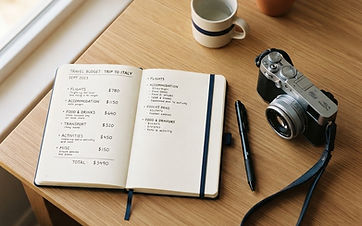
| Category | Monthly cost | |---|---| | Rent | $800 | | Food | $400 | | Transport | $150 | | Phone and internet | $50 | | Entertainment | $200 | | Miscellaneous | $100 | | Total | $1,700 |
This is the minimum you need to earn to break even. Aim to earn more, so you can save for travel within the country and for the trip home.
Step 4: Plan your income
Working holiday income is variable — you may not find work immediately, and the work may be casual or seasonal.
Types of work
- Hospitality: cafes, restaurants, bars — common, flexible, and available in most cities
- Retail: shops, supermarkets — similar to hospitality
- Office temping: reception, admin, data entry — better pay, less flexible
- Agriculture: fruit picking, farm work — common in regional Australia, often required for visa extension
- Skilled work: if you have qualifications (IT, trades, healthcare), you may find work in your field
The reality
- Finding work takes time: expect 2–6 weeks to find your first job, especially if you arrive in a new city with no network.
- Pay varies: hospitality and retail pay around minimum wage ($20–$25/hour in Australia, similar in other countries). Office and skilled work pays more.
- Hours vary: casual work may not give you full-time hours. Budget for 30–35 hours/week, not 40.
- Tax: working holiday makers in Australia pay 15% tax on income up to $45,000. Other countries have their own rules. Understand the tax system before you go.
The income estimate
For Australia:
- Full-time minimum wage: about $1,200/week before tax, $1,020/week after 15% tax
- Casual (30 hours/week): about $900/week before tax, $765/week after tax
- Monthly (casual): about $3,300/month after tax
Against a monthly budget of $1,700, this leaves $1,600/month for savings, travel, or a buffer. But remember: this assumes you find work immediately, which you may not.
Step 5: Manage the transition
The first 2–3 months are the hardest — you're setting up, finding work, and spending your savings. Plan for this:
The setup phase (weeks 1–4)
- Arrive: find short-term accommodation (a hostel or Airbnb) for the first 1–2 weeks while you find a sharehouse
- Get a bank account: set up a local bank account as soon as possible — you'll need it for pay and to avoid foreign transaction fees
- Get a tax number: in Australia, a Tax File Number (TFN); in the UK, a National Insurance Number. You need this to work legally.
- Find a sharehouse: rooms in sharehouses are the most affordable accommodation. Look on flatmate websites.
- Job hunt: start applying immediately. Hospitality and retail jobs can be found within 1–2 weeks; office work may take longer.
The settling phase (weeks 5–12)
- First pay: your first pay arrives — usually 2–4 weeks after you start work. Budget for 4–6 weeks between arriving and your first pay.
- Routine: you establish a routine — work, home, social life. The working holiday starts to feel normal.
- Travel planning: once you're earning, you can plan weekend trips and longer travel within the country.
The established phase (months 3+)
- Stable income: you're earning regularly and covering your costs.
- Saving for travel: you're saving for trips within the country and for the flight home.
- Visa planning: if you want to extend, start planning the regional work (in Australia) or extension application.
Step 6: Handle tax and superannuation
Tax
Working holiday makers pay tax in the country they work in. Understand the system:
- Australia: 15% on income up to $45,000, then standard rates above. You may be able to claim a tax refund at the end of the financial year — many working holiday makers get a refund. See the ATO for details.
- UK: you pay income tax and National Insurance, but may be able to claim a refund when you leave.
- Other countries: check the local tax authority.
Superannuation
In Australia, your employer must pay superannuation (currently 11.5%) on top of your wages. This is your money, and you can claim it back when you leave Australia permanently — through the Departing Australia Superannuation Payment (DASP). Keep track of your super fund details so you can claim it later.
Step 7: Manage money across countries
A working holiday involves money in two countries — your home country and the destination. This requires planning:
Bank accounts
- Keep your home bank account: for bills, subscriptions, and any income from home
- Open a destination bank account: for pay and local expenses. This avoids foreign transaction fees and gives you a local account number for employers.
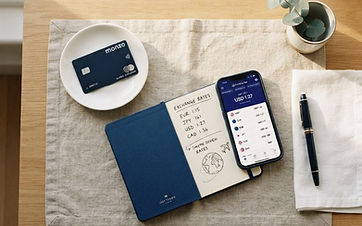
- Use a travel card: for the transition period, before you have a local account. See our guide to multi-currency budgeting.
Ongoing costs at home
Don't forget costs that continue while you're away:
- Subscriptions: cancel what you don't need, or pause them. See our guide to auditing subscriptions.
- Phone plan: switch to a cheaper plan or pause it if you can.
- Storage: if you're keeping your stuff, storage costs money. Consider selling or donating instead.
- Health insurance: check whether your home policy covers you overseas, or pause it if you have travel insurance.
Sending money home
If you earn more than you spend and want to send money home, use a service like Wise or Revolut to get a good exchange rate and low fees. Don't use your bank's international transfer — the fees and margins are usually high.
Step 8: Plan for the end
A working holiday has an end date. Plan for it:
- The flight home: budget for the return flight, which you should have planned for from the start.
- Final expenses: last month's rent, bond return, selling a car if you bought one.
- Tax refund: file your tax return before you leave, or arrange to have it processed after.
- Super refund: claim your superannuation through DASP.
- What's next: have a plan for when you return — a job, a place to live, a goal. Many working holiday makers struggle with the return because they haven't planned for it.
Common working holiday money mistakes
- Arriving with too little savings. The most common mistake. You need 2–3 months of living costs as a buffer, plus setup costs. Arriving with the visa minimum is not enough.
- Not budgeting for the setup phase. The first 2–3 months are expensive — bond, rent in advance, phone, transport, job-hunting costs. Plan for this.
- Not understanding tax. Working holiday makers pay tax, and the rules are different from residents. Understand the system before you go.
- Not claiming refunds. Tax refunds and superannuation are your money. Claim them.
- Not having travel insurance. Medical care overseas is expensive. Insurance is essential.
- Not planning for the end. The working holiday ends. Have a plan for the return — a flight, a place to live, a job.
- Overspending in the first months. It's exciting to be in a new country, and it's easy to spend. Stick to your budget, especially before you have income.
How Payday Compass helps
The Payday Compass app helps with working holiday finances:
- Track your pre-departure savings: build the fund before you go, with a target and per-pay contribution
- Track income and expenses in the destination currency: use the Travel Money module with multi-currency support
- See your runway: know how long your savings will last if you don't find work immediately
- Plan for the return: track the fund for the flight home and final expenses
For a quick check on how much to save before you go, use the free payday calculator.
Summary
A working holiday is a year abroad funded by work, not a holiday funded by savings. Save $15,000–$20,000 before you go (more than the visa minimum), budget for the destination's cost of living, plan for variable income, manage the 2–3 month setup phase, understand tax and superannuation, keep bank accounts in both countries, and plan for the end. The most common mistake is arriving with too little — the working holiday is an experience, not a way to earn money, and arriving with a solid financial foundation is what makes it work.
To plan and track a working holiday, try the Payday Compass app.
Put it into practice
The Payday Compass workbook brings these ideas together in one organised spreadsheet.
Explore the Budget Planner