How to Budget for a Trip to Japan from Australia: A Practical Guide
Japan is one of the best-value destinations for Australians, but the exchange rate, cash culture, and cost variation between regions catch people off guard. Here's a practical budget for a two-week trip.

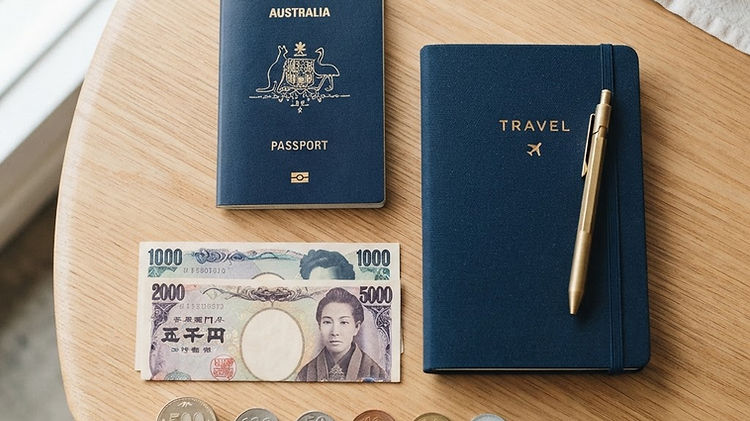
Why Japan trips catch people off guard
Japan is one of the most rewarding travel destinations for Australians — safe, clean, culturally rich, and with a favourable exchange rate for AUD. But it also catches people off guard financially, for three reasons:
- The exchange rate moves. Between planning and travelling, AUD to JPY can shift 5–10%, and the same budget buys noticeably different amounts.
- Cash is still king. While card acceptance has improved, many restaurants, temples, and small shops are cash-only. You need to carry and track physical yen.
- Costs vary wildly by region. Tokyo and Kyoto are expensive; smaller cities and rural areas can be half the daily cost for the same quality of experience.
This guide walks through a practical budget for a two-week Japan trip from Australia, with real cost ranges and a system for tracking spending in yen while planning in AUD.
Step 1: Start with the big three costs
Before daily spending, three costs dominate a Japan trip budget:
Flights
Return flights from Australia to Tokyo range from $900–$1,600 in economy, depending on season and how far ahead you book. Sales under $800 return happen, but don't plan around them — budget the normal range and treat a sale as a bonus.
Accommodation
- Business hotels (APA, Sotetsu, Daiwa Roynet): $70–$120/night for a small but clean double room
- Hostels and capsule hotels: $30–$50/night per person
- Airbnb / machiya (traditional houses): $80–$200/night depending on location and size
- Ryokan (traditional inns): $150–$400/night, often includes dinner and breakfast
For two weeks, accommodation alone can range from $500 (hostels) to $2,500 (mid-range hotels). Pick your level and budget accordingly.
Japan Rail Pass (or individual tickets)
The JR Pass price increased significantly in October 2023. For a two-week trip:
- 14-day JR Pass: roughly $400–$480 AUD (check current price — it changes)
- Individual tickets: often cheaper if you're not doing long-distance shinkansen travel every few days
The JR Pass is worth it if you're travelling between cities multiple times (Tokyo → Kyoto → Hiroshima → Tokyo, for example). If you're staying in one region, individual tickets are usually cheaper. Use an online JR fare calculator to compare before buying.
Step 2: Estimate daily spending
Once flights, accommodation and rail are sorted, daily spending covers food, transport within cities, activities, and shopping. In Japan, these are surprisingly affordable:
Food
- Convenience stores (7-Eleven, Lawson, FamilyMart): $3–$8 for a meal (onigiri, bento, sandwiches)
- Ramen and casual restaurants: $8–$15 for a full meal
- Mid-range restaurants: $15–$30 per person
- High-end sushi or kaiseki: $50–$200+ per person
A realistic daily food budget is $25–$50 per person if you mix convenience stores, casual restaurants, and one nicer meal.
Local transport
- Subway and train fares within cities: $2–$5 per ride
- IC card (Suica/Pasmo): load it with yen and tap on/off; most rides are $2–$3
- Taxis: expensive — $8–$15 for short trips. Use them sparingly.
Budget $5–$15/day for local transport if you're using trains and walking.
Activities and entrance fees
- Temples and shrines: mostly free; some charge $2–$5
- Museums: $5–$15
- TeamLab, Tokyo Skytree, themed attractions: $15–$30
- Day tours and experiences: $30–$100+
Budget $10–$30/day for activities, with some days higher if you're doing a paid experience.
Shopping and souvenirs
This is the most variable category. Set a fixed amount before you travel — say $200–$500 total — and track it separately from daily spending.
Step 3: Build the budget
Here's a realistic two-week Japan budget for two people, mid-range style:
| Category | Cost (AUD, two people) | |---|---| | Flights (return) | $2,400 | | Accommodation (14 nights, $100/night) | $1,400 | | JR Pass (14-day, two people) | $900 | | Food ($70/day for two) | $980 | | Local transport ($15/day) | $210 | | Activities ($30/day) | $420 | | Shopping and souvenirs | $400 | | Travel insurance | $150 | | Total | $6,860 |
For one person, roughly $4,500–$5,000. For budget travellers staying in hostels and eating from convenience stores, $3,000–$3,500 is achievable.
Step 4: Handle the exchange rate
AUD to JPY fluctuates. In recent years it's ranged from roughly 90 to 105 JPY per AUD. A 10% shift on a $5,000 trip is $500 — enough to matter.
Two approaches:
- Lock in a rate. If you see a favourable rate before your trip, convert a chunk of AUD to JPY then. You know exactly what you have.
- Convert as you go. Use a travel card or fee-free debit card and withdraw yen in Japan. You get the rate on the day, which could be better or worse.
Most people do a mix: convert some before (for the first few days) and withdraw the rest in Japan. Keep an eye on the rate in the weeks before you travel.
Step 5: Track spending in yen, plan in AUD
The hardest part of Japan budgeting is tracking spending in yen while planning in AUD. A 2,000 yen lunch is roughly $28 — but the exchange rate moves, so the AUD equivalent shifts slightly each day.
Two practical approaches:
-
Use a fixed planning rate. Pick a conservative rate (say 95 JPY = $1 AUD) and use it for the whole trip. Your actual spending will be slightly different, but you'll stay within budget if the rate doesn't move dramatically.
-
Track in yen, convert periodically. Record every expense in yen. Every few days, convert the total to AUD at the current rate to see where you stand. This is more accurate but requires more effort.
The Payday Compass app handles this natively — you set a trip in yen, enter expenses in yen, and it shows you the AUD equivalent and your remaining trip budget. It also connects the trip to your home runway, so you can see whether funding the trip affects your buffer back home.
Step 6: Connect the trip to your home budget
The biggest mistake people make with travel budgets is treating them as separate from everyday money. The money you spend in Japan is money that's not in your account at home — and if you're still paying rent, bills, or a mortgage while you're away, those don't stop.
Before you travel:
- Check your home runway. How many weeks can you cover your home bills while you're away? Use the free payday calculator to see your available money.
- Pre-pay what you can. Pay rent, bills, and subscriptions before you leave so they don't hit while you're travelling.
- Set a trip sinking fund. Save for the trip over several months rather than paying from a single pay. A $5,000 trip saved over 6 months is $833/month — manageable. The same trip from one pay is not.
Summary
A two-week Japan trip from Australia costs roughly $4,500–$7,000 for two people, depending on your style. The keys are: budget the big three (flights, accommodation, rail), estimate daily spending in yen, plan in AUD with a fixed or tracked exchange rate, and connect the trip to your home budget so it doesn't create a gap when you return.
For a tool that tracks your trip in yen, shows the AUD equivalent, and connects it to your home runway, try the Payday Compass Travel Money module.
Put it into practice
The Payday Compass workbook brings these ideas together in one organised spreadsheet.
Explore the Budget Planner